Why plants?
Along with algae, plants are the base of the wetland food chain.
Plants, however, do much more:
- A
part of physical and chemical processes in wetlands
- Provide habitat
- Help stabilize shorelines lessening the erosive force of waves
Plants have adapted to natural conditions present
in wetlands and, therefore, are often ill-adapted to changes such as changes in nutrient levels and water clarity. Plants are found in almost all wetlands and are readily identifiable with a minimum
of training.
Plants are important indicators of water quality;
the IBI is the tool we use to help interpret the often complex changes occuring in wetlands.
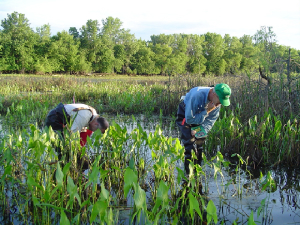
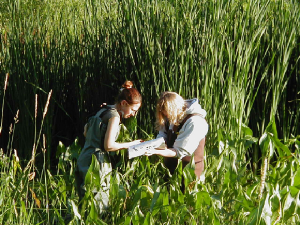
With practice, most plants
used as indicators in WHEP are easy to learn to identify. The "Plant Identification Guide" found on this
website provides a key to identification with pictures and illustrations.
Other plant information: