|
|
 |
Wetlands Vital but Neglected.....
Over
half of the total wetland area of the lower United States has been lost since European settlement. Wetlands have been
drained for farming, residential development, business development and road expansions. Remaining wetlands are often
impacted by current human activities. Very few undisturbed wetlands exist. Wetlands provide a wide variety of functions that protect the quality of all of our waters. Wetlands act as a: - Filter. They filter pollutants
and excess nutrients out of water as it soaks into the ground.
- Sponge. They absorb stormwater and snowmelt, reducing the risk of flood. This slow absorption allows
for much of the water to soak through the soil, recharging our groundwater (drinking water) supply.
- Nursery. Many species of amphibians, mammals, reptiles and birds
rely on the safe wetland environment to raise their young. Wetlands often lack the large fish species and other predators
that may feed on their young.
- Hotel.
Many migrating waterfowl, shorebirds and songbirds stop at wetlands during their migrations in the spring and fall. Wetlands
offer a wide variety of high protein organisms for them to feed on, allowing them to refuel.
- Home. In addition to other wildlife, countless small organisms
(insects, worms, snails, leeches, crustaceans) and plants make wetlands their home. Wetlands offer a very unique habitat.
- Recreation destination.
They provide beautiful views and plenty of opportunities for recreation (birdwatching, canoeing, hunting, exploring).
WHEP volunteers, with scientists and local governments, evaluate the health of our wetlands and work
toward their protection. Volunteers monitor two primary wetland communities:
1. Macroinvertebrates (small organisms without a backbone)
2. Plants
|
|
|
|
|
|
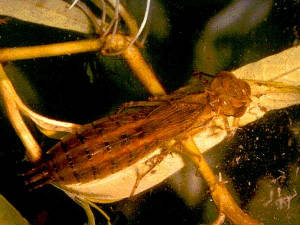
| This is a dragonfly nymph. |
|
|
Volunteers collect and identify aquatic macroinvertebrates.
These include insects, worms, leeches, snails and small crustaceans. Each is sensitive to
different levels of human disturbance. By learning "who" is in our wetlands and their abundance, we can determine the quality of our wetlands.
|
Certain species of plants are more tolerant to poor water quality
than others. Certain plants will flourish in healthy wetlands, while others will not occur at all. Volunteers inventory
plants in selected wetlands. Their findings are then used to determine the health of the wetland.
|
|
|
Both plants and macroinvertebrates are identified,
counted and then used to measure the wetland health through a scoring process called the Index of Biological Integrity
(IBI).
Click here for more information on the IBI.
|
|
|
|
|
|
|
|
|
|
|
|
|
|
|