|
|
 |
|
|
|
What is a macroinvertebrate? Macroinvertebrates
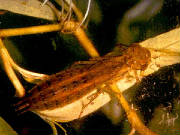
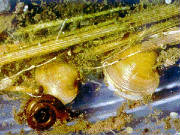
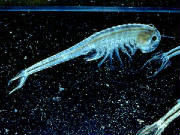
are small organisms without a backbone. Some common macroinvertebrates found in wetlands are: dragonfly nymph,
worms, snails, beetles, leeches, mayflies, caddisflies, small crustaceans and other insects.
|
| Dragonfly nymph |
|
| Snail and clams |
|
| Small crustacean |
Why sample macroinvertebrates?
Macroinvertebrates are useful indicators of the health or condition
of wetlands and other water bodies. They respond to many kinds of pollution, including chemical pollution and physical
disturbance to the landscape around the site, wetland structure, and hydrology. There are several advantages of using
macroinvertebrates: - Invertebrates are commonly and widely found in many types of wetlands.
- Invertebrates respond with
a range of sensitivites to many kinds of pollution, for this reason they are commonly used in toxicity testing to develop
water quality standards.
- Many
aquatic invertebrates complete their life cycles in wetlands, so they are exposed directly to the physical, chemical and biological
conditions within the wetland. Invertebrates with longer life cycles such as dragonflies, may signal that conditions
remained healthy for the duration of their development.
- Aquatic invertebrates are important in wetland food webs for wildlife.
(Taken
from "A Citizen's Guide to Biological Assessment of Wetlands, the Macroinvertebrate Index of Biological Integrity"
Dr. Judy Helgen, MPCA 2002)
|
|
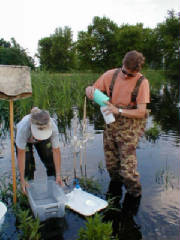
| Volunteers collect a bottletrap sample. |
How do we sample?
Volunteers work as a team to collect one complete dipnet sample
and one complete bottletrap sample from each wetland site. The dipnet sample is collected by sweeping a large net
through the water in or near vegetation. This sampling technique provides the widest number of species. A
bottletrap sample is collected by submerging specially designed 2 liter bottles, mounted on a dowel, about 6 inches below
the surface of the water (see photo below). Bottletrapping allows us to catch the actively swimming predators.
For more specific sampling information please refer to:
Macroinvertebrate Sampling Protocols
Macroinvertebrate Metrics
|
|
|
|
|
|
|
|
|
|
|
|
|
|
|